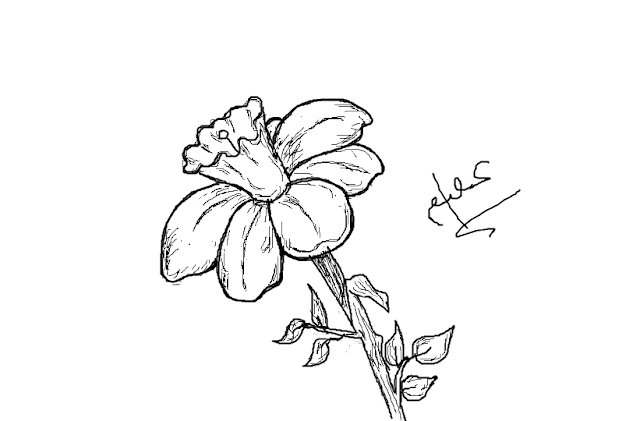
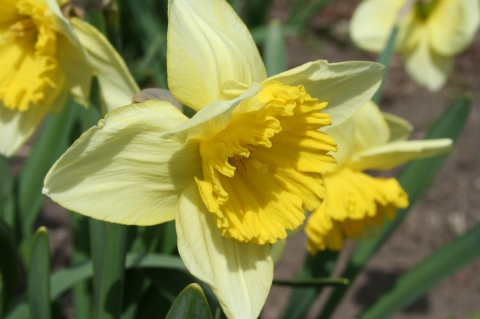
Narcissus /n?:r's?s?s/ is a genus of mainly spring perennial vegetation in the Amaryllidaceae (amaryllis) family. Various common labels including daffodil,[notes 1] daffadowndilly,[3] narcissus, and jonquil are used to describe all or some members of the genus. Narcissus has conspicuous flowers with six petal-like tepals surmounted by a cup- or trumpet-shaped corona. The flowers are usually white or yellow (orange or red in garden kinds), with either standard or contrasting colored corona and tepals.
Narcissus were well known in historic civilisation, both medicinally and botanically, but formally explained by Linnaeus in his Types Plantarum (1753). The genus is normally considered to have about ten portions with around 50 species. The amount of types has assorted, depending how they are classified, as a consequence to similarity between hybridization and types. The genus arose some time in the Late Oligocene to Early Miocene epochs, in the Iberian peninsula and adjacent areas of southwest Europe. The precise origin of the name Narcissus is unfamiliar, but it is often associated with a Greek term for intoxicated (narcotic) and the misconception of the children of this name who fell in love with his own reflection. The English word 'daffodil' appears to be produced from "asphodel", with which it was likened commonly.
The varieties are native to meadows and woods in southern European countries and North Africa with a middle of diversity in the European Mediterranean, particularly the Iberian peninsula. Both wild and cultivated plants have naturalised widely, and were created into the ASIA to the tenth century prior. Narcissi tend to be long-lived bulbs, which propagate by division, but are insect-pollinated also. Known pests, disorders and diseases include viruses, fungi, the larvae of flies, nematodes and mites. Some Narcissus species have become extinct, while others are threatened by increasing tourism and urbanisation.
Historical accounts suggest narcissi have been cultivated from the earliest times, but became increasingly popular in Europe following the 16th hundred years and by the overdue 19th hundred years were an important commercial crop centred primarily on holland. Narcissi are popular as slash plants and since ornamental crops in private and general public gardens today. The long history of breeding has led to thousands of different cultivars. For horticultural purposes, narcissi are labeled into divisions, covering an array of shapes and colours. Like other members of their family, narcissi create a true number of different alkaloids, which provide some protection for the plant, but may be poisonous if ingested accidentally. This property has been exploited for medicinal use in traditional healing and has resulted in the production of galantamine for the treatment of Alzheimer's dementia. Long celebrated in books and artwork, narcissi are associated with a number of themes in several cultures, ranging from fatality to good fortune, and as symbols of springtime. The daffodil is the national flower of Wales and the mark of cancers charities in many countries. The looks of the untamed flowers in springtime is associated with celebrations in many places.
Narcissus is a genus of perennial herbaceous bulbiferous geophytes, dying back again after flowering to an underground storage bulb. They regrow in the following calendar year from brown-skinned ovoid lights with pronounced necks, and reach heights of 5-80 cm with regards to the species. Dwarf types such as N. asturiensis have a maximum height of 5-8 cm, while Narcissus tazetta might increase as tall as 80 cm.
The plants are scapose, having an individual central leafless hollow bloom stem (scape). Several blue-green or green, narrow, strap-shaped leaves occur from the light bulb. The plant stem bears a solitary bloom, but once in a while a cluster of blossoms (umbel). The flowers, which are usually conspicuous and white or yellowish, both or rarely renewable sometimes, consist of a perianth of three parts. Closest to the stem (proximal) is a floral tube above the ovary, then an exterior ring composed of six tepals (undifferentiated sepals and petals), and a central disk to conical molded corona. The flowers may hang down (pendent), or be erect. There are six pollen bearing stamens encircling a central style. The ovary is substandard (below the floral parts) comprising three chambers (trilocular). The berries involves a dried capsule that splits (dehisces) launching numerous black seed products.
The bulb lays dormant following the leaves and rose stem die back and has contractile root base that move it down further into the soil. The bloom stem and leaves form in the light bulb, to emerge the next season. Most species are dormant from summer time to later winter, flowering in the springtime, though a few kinds are fall months flowering.
2nd New Mini Album quot;Narcissusquot; アペニン山脈の山と雪

Pink Narcissus39;s Pig Miracle Day by Oli Spleen GoFundMe

what’s blooming… » Narcissus St Patrick’s Day
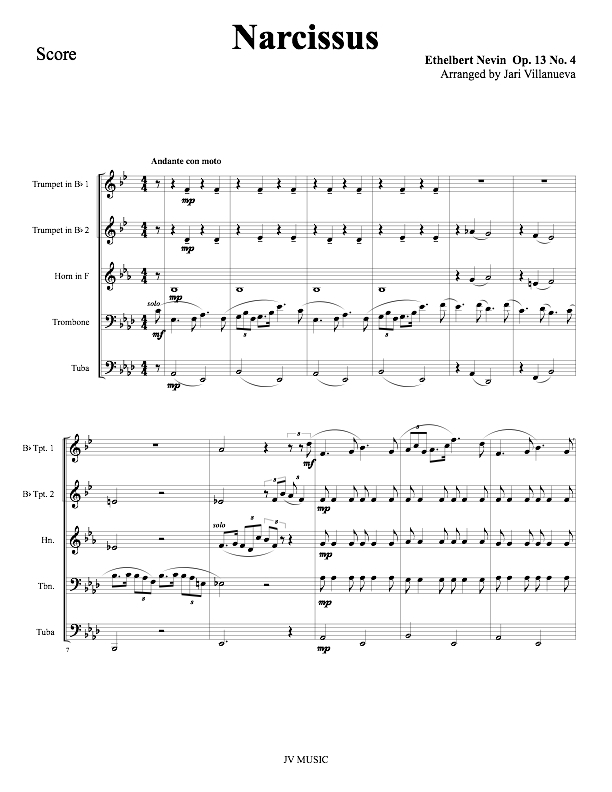
Narcissus by Ethelbert Nevin Op.13, No. 4 Brass Quintet Store JV
Narcissus Heavy Metal Wednesday Reunion revisits Kenmore’s humpday

Narcissus /n?:r's?s?s/ is a genus of mostly spring perennial crops in the Amaryllidaceae (amaryllis) family. Various common names including daffodil,[notes 1] daffadowndilly,[3] narcissus, and jonquil are being used to describe all or some members of the genus. Narcissus has conspicuous flowers with six petal-like tepals surmounted by a cup- or trumpet-shaped corona. The flowers are usually white or yellow (orange or red in garden kinds), with either standard or contrasting coloured tepals and corona.
Narcissus were well known in old civilisation, both and botanically medicinally, but formally identified by Linnaeus in his Species Plantarum (1753). The genus is normally considered to have about ten parts with around 50 species. The amount of kinds has mixed, depending on how they are labeled, due to similarity between kinds and hybridization. The genus arose some right amount of time in the Late Oligocene to Early Miocene epochs, in the Iberian peninsula and adjacent areas of southwest Europe. The precise origins of the real name Narcissus is unfamiliar, but it is often associated with a Greek word for intoxicated (narcotic) and the myth of the junior of this name who fell in love with his own representation. The English word 'daffodil' appears to be produced from "asphodel", with which it was likened commonly.
The types are native to meadows and woods in southern European countries and North Africa with a middle of diversity in the Traditional western Mediterranean, particularly the Iberian peninsula. Both cultivated and wild plants have naturalised widely, and were presented in to the Far East to the tenth century prior. Narcissi have a tendency to be long-lived bulbs, which propagate by division, but are insect-pollinated also. Known pests, disorders and diseases include viruses, fungi, the larvae of flies, mites and nematodes. Some Narcissus species have grown to be extinct, while others are threatened by increasing tourism and urbanisation.
Historical accounts suggest narcissi have been cultivated from the initial times, but became ever more popular in Europe following the 16th century and by the overdue 19th century were an important commercial crop centred mainly on the Netherlands. Today narcissi are popular as slice flowers and as ornamental vegetation in private and general population gardens. The long history of breeding has resulted in thousands of different cultivars. For horticultural purposes, narcissi are categorised into divisions, covering a variety of shapes and colours. Like other members with their family, narcissi produce a number of different alkaloids, which provide some protection for the plant, but may be poisonous if accidentally ingested. This property has been exploited for medicinal use within traditional healing and has resulted in the production of galantamine for the treating Alzheimer's dementia. Long celebrated in fine art and books, narcissi are associated with a true number of themes in various cultures, ranging from loss of life to fortune, and as symbols of spring. The daffodil is the countrywide blossom of Wales and the image of cancer tumor charities in many countries. The appearance of the outrageous flowers in planting season is associated with festivals in many places.
Narcissus is a genus of perennial herbaceous bulbiferous geophytes, dying back again after flowering to a underground storage light. They regrow in the next time from brown-skinned ovoid bulbs with pronounced necks, and reach levels of 5-80 cm with regards to the species. Dwarf types such as N. asturiensis have a maximum elevation of 5-8 cm, while Narcissus tazetta might develop as tall as 80 cm.
The crops are scapose, having an individual central leafless hollow rose stem (scape). Several blue-green or green, narrow, strap-shaped leaves come up from the bulb. The vegetable stem bears a solitary bloom, but occasionally a cluster of bouquets (umbel). The blooms, which are usually conspicuous and white or yellowish, sometimes both or rarely inexperienced, contain a perianth of three parts. Closest to the stem (proximal) is a floral tube above the ovary, then an outer ring composed of six tepals (undifferentiated sepals and petals), and a central disk to conical formed corona. The blossoms may hang down (pendent), or be erect. You will discover six pollen bearing stamens adjoining a central style. The ovary is second-rate (below the floral parts) consisting of three chambers (trilocular). The fruits includes a dried up capsule that splits (dehisces) launching numerous black seeds.
The bulb is dormant following the leaves and bloom stem die again and has contractile roots that take it down further in to the soil. The blossom leaves and stem form in the light bulb, to emerge the following season. Most species are dormant from summer to overdue winter, flowering in the spring, though a few types are fall flowering.
Kellermensch 39;Narcissus39; / Ep

NEW Narcissus and Goldmund A Novel by Nobel Prize Winner Hermann Hesse

CHRIS ROBINSON BROTHERHOOD Perform “Narcissus Soaking Wet” Live At

Narcissus 39;Sempre Avanti39; LargeCupped Daffodil