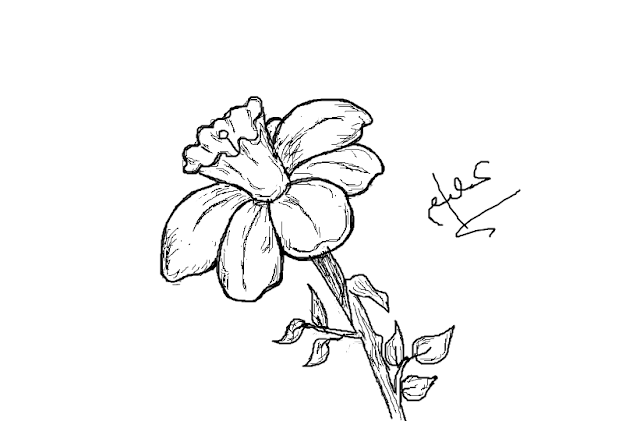
Narcissus /n?:r's?s?s/ is a genus of mostly spring perennial plant life in the Amaryllidaceae (amaryllis) family. Various common brands including daffodil,[notes 1] daffadowndilly,[3] narcissus, and jonquil are being used to describe all or some members of the genus. Narcissus has conspicuous flowers with six petal-like tepals surmounted by a cup- or trumpet-shaped corona. The blossoms are usually white or yellow (orange or pink in garden kinds), with either standard or contrasting colored tepals and corona.
Narcissus were popular in early civilisation, both and botanically medicinally, but formally described by Linnaeus in his Varieties Plantarum (1753). The genus is generally thought to have about ten parts with about 50 species. The amount of varieties has varied, depending how they are categorized, thanks to similarity between hybridization and types. The genus arose some right time in the Late Oligocene to Early Miocene epochs, in the Iberian peninsula and adjacent regions of southwest Europe. The precise origins of the name Narcissus is unidentified, but it is associated with a Greek term for intoxicated (narcotic) and the myth of the children of this name who fell deeply in love with his own representation. The English phrase 'daffodil' is apparently produced from "asphodel", with which it was compared commonly.
The types are local to meadows and woods in southern Europe and North Africa with a center of variety in the American Mediterranean, the Iberian peninsula particularly. Both cultivated and wild plants have naturalised widely, and were presented into the Far East to the tenth hundred years prior. Narcissi tend to be long-lived bulbs, which propagate by division, but are also insect-pollinated. Known pests, diseases and disorders include viruses, fungi, the larvae of flies, nematodes and mites. Some Narcissus species have grown to be extinct, while some are threatened by increasing tourism and urbanisation.
Historical accounts suggest narcissi have been cultivated from the earliest times, but became ever more popular in Europe after the 16th hundred years and by the later 19th century were an important commercial crop centred mainly on the Netherlands. Today narcissi are popular as trim plants and since ornamental crops in private and general public gardens. The long history of breeding has resulted in thousands of different cultivars. For horticultural purposes, narcissi are labeled into divisions, covering an array of colours and shapes. Like other members of their family, narcissi produce a number of different alkaloids, which provide some protection for the plant, but may be poisonous if accidentally ingested. This property has been exploited for medicinal used in traditional healing and has resulted in the production of galantamine for the treating Alzheimer's dementia. Long celebrated in art and literature, narcissi are associated with a true number of themes in different cultures, ranging from loss of life to fortune, and as symbols of springtime. The daffodil is the countrywide blossom of Wales and the symbol of malignancy charities in many countries. The looks of the untamed flowers in spring and coil is associated with celebrations in many places.
Narcissus is a genus of perennial herbaceous bulbiferous geophytes, dying again after flowering to an underground storage light bulb. They regrow in the next year from brown-skinned ovoid lights with pronounced necks, and reach levels of 5-80 cm with regards to the species. Dwarf species such as N. asturiensis have a maximum height of 5-8 cm, while Narcissus tazetta might increase as tall as 80 cm.
The plants are scapose, having a single central leafless hollow bloom stem (scape). Several blue-green or green, slim, strap-shaped leaves arise from the bulb. The flower stem usually bears a solitary bloom, but once in a while a cluster of blossoms (umbel). The plants, that happen to be usually conspicuous and white or yellow, both or almost never inexperienced sometimes, consist of a perianth of three parts. Closest to the stem (proximal) is a floral tube above the ovary, then an outside ring composed of six tepals (undifferentiated sepals and petals), and a central disc to conical molded corona. The blossoms may suspend down (pendent), or be erect. You will find six pollen bearing stamens encompassing a central style. The ovary is substandard (below the floral parts) consisting of three chambers (trilocular). The berries includes a dry out capsule that splits (dehisces) launching numerous black seed products.
The bulb lays dormant after the leaves and blossom stem die back and has contractile root base that take it down further in to the soil. The bloom stem and leaves form in the light, to emerge the following season. Most varieties are dormant from summer season to overdue winter, flowering in the planting season, though a few types are fall months flowering.
Primrose Hill and Chalk Farm British History Online

Narcissus Luttrell, R. Lyford, Narcissus Luttrell, 1693

Settlement and building: From 1680 to 1865, southeast Chelsea and the

Medieval and Renaissance Windmills and Watermills

from September 1678 to April 1714 : Narcissus Luttrell : 9781108035965

Narcissus /n?:r's?s?s/ is a genus of predominantly spring perennial plants in the Amaryllidaceae (amaryllis) family. Various common labels including daffodil,[notes 1] daffadowndilly,[3] narcissus, and jonquil are used to describe all or some known members of the genus. Narcissus has conspicuous flowers with six petal-like tepals surmounted by a cup- or trumpet-shaped corona. The blossoms are usually white or yellowish (orange or green in garden varieties), with either uniform or contrasting colored tepals and corona.
Narcissus were well known in historic civilisation, both medicinally and botanically, but formally detailed by Linnaeus in his Types Plantarum (1753). The genus is generally considered to have about ten parts with approximately 50 species. The true range of species has assorted, depending how they are categorised, a consequence of to similarity between hybridization and kinds. The genus arose a while in the Late Oligocene to Early Miocene epochs, in the Iberian peninsula and adjacent areas of southwest Europe. The precise origin of the true name Narcissus is anonymous, but it is often associated with a Greek phrase for intoxicated (narcotic) and the myth of the youth of that name who fell in love with his own reflection. The English term 'daffodil' is apparently produced from "asphodel", with which it was compared commonly.
The kinds are indigenous to meadows and woods in southern Europe and North Africa with a center of variety in the American Mediterranean, the Iberian peninsula particularly. Both wild and cultivated plants have naturalised widely, and were introduced in to the Far East to the tenth century prior. Narcissi tend to be long-lived bulbs, which propagate by division, but are also insect-pollinated. Known pests, diseases and disorders include viruses, fungi, the larvae of flies, nematodes and mites. Some Narcissus species have grown to be extinct, while others are threatened by increasing tourism and urbanisation.
Historical accounts suggest narcissi have been cultivated from the earliest times, but became ever more popular in Europe following the 16th century and by the overdue 19th hundred years were an important commercial crop centred generally on the Netherlands. Narcissi are popular as cut plants and since ornamental crops in private and public gardens today. The long history of breeding has led to thousands of different cultivars. For horticultural purposes, narcissi are categorised into divisions, covering a variety of shapes and colours. Like other members of their family, narcissi create a true number of different alkaloids, which provide some protection for the plant, but may be poisonous if accidentally ingested. This property has been exploited for medicinal use within traditional healing and has resulted in the production of galantamine for the treating Alzheimer's dementia. Long celebrated in fine art and literature, narcissi are associated with a number of themes in different cultures, ranging from death to fortune, and as symbols of springtime. The daffodil is the national bloom of Wales and the sign of tumors charities in many countries. The looks of the outdoors flowers in springtime is associated with celebrations in many places.
Narcissus is a genus of perennial herbaceous bulbiferous geophytes, dying back after flowering to an underground storage light. They regrow in the next calendar year from brown-skinned ovoid lights with pronounced necks, and reach levels of 5-80 cm with regards to the species. Dwarf varieties such as N. asturiensis have a maximum level of 5-8 cm, while Narcissus tazetta may increase as extra tall as 80 cm.
The crops are scapose, having a single central leafless hollow bloom stem (scape). Several green or blue-green, small, strap-shaped leaves happen from the light bulb. The herb stem usually bears a solitary bloom, but occasionally a cluster of blossoms (umbel). The blooms, that happen to be usually conspicuous and white or yellowish, both or almost never green sometimes, contain a perianth of three parts. Closest to the stem (proximal) is a floral pipe above the ovary, then an exterior ring composed of six tepals (undifferentiated sepals and petals), and a central disk to conical shaped corona. The bouquets may hang up down (pendent), or be erect. You can find six pollen bearing stamens encircling a central style. The ovary is substandard (below the floral parts) comprising three chambers (trilocular). The fruits consists of a dry out capsule that splits (dehisces) releasing numerous black seed products.
The bulb lays dormant after the leaves and flower stem die again and has contractile roots that yank it down further in to the soil. The blossom leaves and stem form in the light, to emerge the next season. Most varieties are dormant from summer time to past due winter, flowering in the springtime, though a few types are autumn flowering.
Narcissus And Echo Poem Echo And Narcissus Docx

echonarcissus2

poussinecho amp; narcissus Narcissus Pinterest

Narcissus And Echo Poem Echo And Narcissus Statues